







By Urdu Report Editorial Team
Islamabad: Defence Minister Khawaja Asif has said Pakistan’s 36 divisions could be converted into administrative units without creating separate provincial assemblies or chief ministers for each unit.
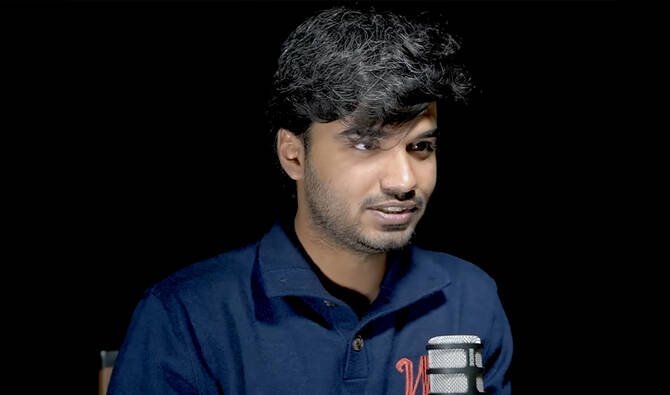
Speaking in a television interview on Thursday, September 3, 2026, Asif discussed local governments, administrative reforms, new administrative units and Pakistan’s diplomatic policy. He also criticised the political strategies of the Pakistan Peoples Party and Pakistan Tehreek-e-Insaf.
Proposal to turn 36 divisions into administrative units
Asif said the existing system had become paralysed and that fixing it was the responsibility of those in government.
He noted that the 18th Amendment had directed provinces to establish local governments at the grassroots level, but the provision had not been implemented.
Discussing the creation of new provinces, the defence minister said decisions on new provinces or administrative units would ultimately have to be made at the federal level.
He suggested that Pakistan’s 36 divisions could be made administrative units. However, he said it would not be necessary for all 36 units to have separate assemblies or chief ministers.
Asif added that if democracy was to be taken seriously, it should also be visible at the grassroots level.
Warning to India
The defence minister also issued a strong warning to India. He said that if India attempted another “misadventure”, Pakistan would respond as it had in the past.
Asif said Pakistan had previously responded to India and described the outcome as evident.
Asif discusses water and the Indus Waters Treaty
Calling water Pakistan’s “lifeline”, Asif said numerous wars had been fought around water disputes around the world.
He maintained that neither Pakistan nor India could unilaterally suspend or terminate the Indus Waters Treaty.
Praise for Pakistan’s diplomatic policy
Asif described Pakistan’s recent diplomatic achievements as historic. He said there had been no comparable examples of such successes in the country’s past.
He also described the Mecca agreement as a major achievement.
The defence minister said the 65-year history of Pakistan-China friendship could not be questioned and described the relationship as stronger than an iron wall. He added that Pakistan also had good relations with the United States and should maintain them in the future.
Criticism of PPP and PTI
Speaking about domestic politics, Asif said he had good personal relations with the Pakistan Peoples Party and was therefore taking a cautious approach.
However, he claimed that the PPP had lost its political standing in Sindh over the past 15 years and that its current leadership had failed to restore its previous popularity.
He also criticised PTI, saying the party needed to reconsider the approach it had adopted over the past two to three years. He particularly criticised inappropriate language used on social media.
Sindh Assembly passes resolution against division of province
The debate over new provinces also continued in Sindh, where the provincial assembly passed a resolution opposing the division of the province.
Sindh Chief Minister Murad Ali Shah said the future of Sindh could not be decided by people sitting elsewhere. He also warned the National Assembly against even discussing the division of Sindh.
Shah said that if the objective was better governance, the focus should be on administrative reforms rather than dividing provinces.
He supported strengthening local governments and transferring powers to the grassroots level. He said additional districts and administrative units could be created in Sindh where necessary, but administrative reforms should not be linked to the division of the province.
Murad Ali Shah calls for separate discussion on administrative units
Before the resolution was passed, Shah asked opposition members to agree on a joint resolution against the division of Sindh.
He said Nisar Khuhro had prepared the resolution while following parliamentary rules, but the opposition had proposed adding the issue of administrative units.
According to Shah, the creation of administrative units should not have been linked to the central issue of dividing Sindh. If the opposition wanted to discuss administrative units or local governments, he said, it could have introduced a separate resolution.
Shah said the government supported strengthening local governments and was prepared to take further steps for that purpose.
He also criticised the position of MQM and Mustafa Kamal during the debate over new provinces. Shah said Kamal supported administrative units, while MQM members in the Sindh Assembly opposed dividing Sindh, describing the positions as contradictory.