






By Urdu Report Editorial Team
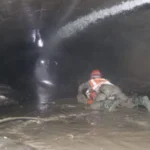
Two people have been rescued alive from a deep tunnel at the Trishuli 3A hydropower station in Nepal after rescuers battled mud, rocks and large amounts of water to reach them.
The rescue came after a powerful flash flood near the Nepal-Tibet border last week. The disaster has killed 1,300 people so far, according to the source.
Arnold Dix, an expert assisting Nepal’s hydropower authorities, described the successful rescue as “miracles on miracles” because of the challenges faced by the rescue teams.
Finding a buried tunnel entrance
The first major challenge was locating the tunnel entrance. The area had been transformed by the flooding, while the entrance, which had previously been on a mountainside, was buried underground.
Dix said he had never worked on a rescue operation where teams first had to locate a tunnel entrance that had been completely covered by an avalanche.
His team used engineering techniques, old maps, post-disaster satellite images and helicopter video footage to identify the likely location. They also examined features remaining on the mountainside, including electricity poles.
After locating the entrance, rescuers began digging to find the people trapped inside.
Rescuers faced mud, rocks and water
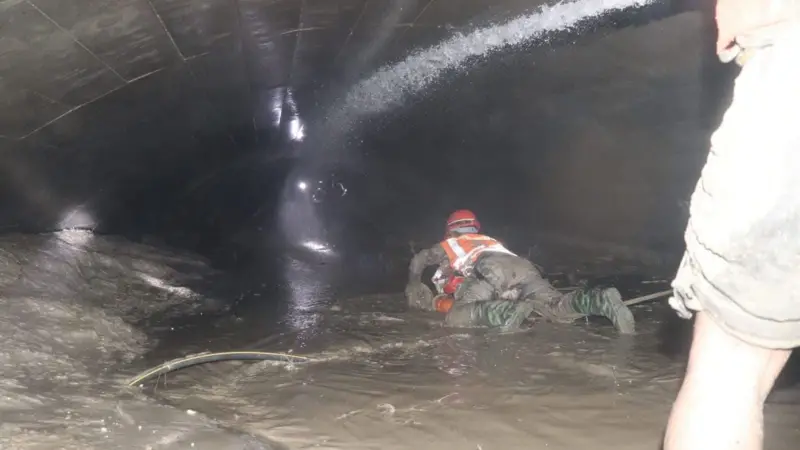
The tunnel was blocked by mud and rocks, including some boulders larger than vehicles. Clearing the route required rescuers to use explosives, despite the risks involved.
Dix said explosives are normally avoided because they can endanger both trapped people and rescuers. However, he praised the Nepalese Army for carrying out the blasts with great precision and preventing the tunnel from becoming unstable.
The team also discovered that the tunnel was still filled with water.
Rescuers used excavation equipment and pumps to dig several drainage channels from the tunnel toward the river. This allowed them to remove water from the flooded passage.
Eventually, the team had to create a narrow passage through debris in the upper section of the tunnel. The opening was only large enough for one person to pass through.
Dix said the approach had an important advantage because the roof of the original tunnel could serve as the roof of the smaller passage. It also reduced the risk from further flooding.
Voices heard inside the tunnel
Early on Friday morning, rescuers heard sounds they believed could be human voices.
According to local reports, rescuers called out, “Don’t worry, we have come to rescue you.” A faint response of “OK” was heard from inside.
Shortly afterward, Sanjaya Shah and Kabir Maharjan were brought out alive.
The rescue operation, however, is far from over. Dozens of people are still feared to be trapped inside the tunnel.
Rescue team moves toward the “Goldilocks zone”
Dix estimated that rescuers had dug around 60 metres from the entrance. They still needed to excavate another 150 metres to reach the hydropower station deeper inside the mountain.
Rescuers remain hopeful that flood debris did not reach the station. If it did, Dix warned that those inside could have been struck by rocks and mud or the station could have been flooded.
The team also faces the possibility of encountering more water as excavation continues. Dix said water could potentially flood the tunnel workers.
There is also a risk of another flood outside the tunnel, which could send water in from behind. This means rescuers face the danger of water from both directions.
Despite those risks, Friday’s successful rescue has given the team renewed confidence that its approach is working.