








By Urdu Report Editorial Team
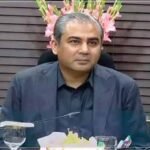
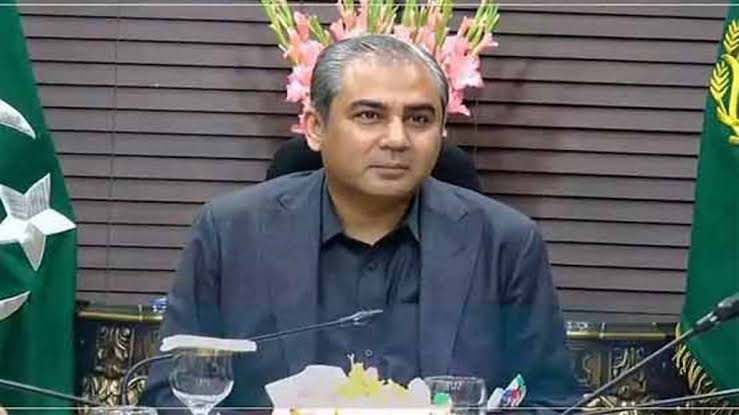
Interior Minister Mohsin Naqvi has said that the creation of new administrative units should be decided by the people and through constitutional procedures, rather than by an individual, government or political party.
Speaking at the National Policy Dialogue, Naqvi said Pakistan’s growing population requires a fresh review of its administrative structure. However, he stressed that no action would be taken outside the Constitution.
He said that if the people of Pakistan want new administrative units, they should be created. If the public does not support the idea, it should not be imposed on them. According to Naqvi, public opinion must remain the priority in such a decision.
Administrative Reform Must Follow the Constitution
Naqvi said no one had given the government the authority to take unconstitutional measures. He noted that everyone had taken an oath to uphold the Constitution.
At the same time, he said there were many options available within the constitutional framework for improving administration and governance.
The minister argued that Pakistan’s population has increased several times over the 79 years since the country’s creation. He compared the situation to a growing family that may move from one house into two, four or eight homes as its needs expand.
He said that just as new tehsils and districts can be created, the possibility of forming new administrative units can also be considered.
Public Services Remain a Major Challenge
Naqvi said the central question should be what the government is delivering to citizens. He identified education, healthcare, clean water and justice as basic rights.
He pointed to several challenges facing the country, saying that nearly 25 million children are still out of school, four out of every 10 children do not have adequate nutrition, and only 55% of Pakistanis have access to clean water.
He also said around 2 million cases remain pending in the courts, forcing people to struggle for access to justice.
According to Naqvi, these problems are not the result of one government alone but reflect the cumulative outcome of 79 years. He said these realities are also officially acknowledged and that efforts are continuing to address them.
Focus on Jobs and Merit for Young People
The interior minister said parents today still wait for better education, healthcare and justice for their children, just as previous generations did decades ago.
He said the government must focus not only on the past but also on what the current and future generations expect. Young people, he added, primarily want employment and opportunities based on merit.
He said graduates are asking where jobs are available after university, whether employment opportunities are based on merit, and whether young people can progress in their own regions.
Debate Over a New Administrative Structure
In a separate part of his remarks, Naqvi said restructuring the administrative system does not mean dismantling it. Rather, it means correcting weaknesses so that the impact of government reaches ordinary citizens.
He said the process should move forward according to the Constitution, democratic principles, political consensus and public wishes.
Naqvi also said the issue should not be treated as an emotional or immediate political decision. He described the public as the biggest stakeholder and said experts and relevant groups should first assess the potential advantages and disadvantages of new administrative units. Their proposals should then be presented to the public for feedback.
Development Concentrated in Major Cities
Naqvi questioned why development and public facilities remain heavily concentrated in a few major cities.
He cited Quetta in Balochistan, Peshawar in Khyber Pakhtunkhwa, Lahore in Punjab and Karachi in Sindh, asking why other cities of a similar scale have not developed alongside them.
He attributed part of the problem to the government’s tendency to focus on the cities where decision-makers themselves live.
Naqvi said he had tried to visit every district of Punjab but, despite a year of continuous effort, had been unable to visit more than 70% of the province’s areas. He said this illustrates the size of the province and the administrative challenges involved.
National Policy Dialogue in Lahore
The remarks were made at the first panel of the National Policy Dialogue, organised by the Pakistan Political Science Consortium at the University of Management and Technology in Lahore.
The first panel included former federal minister Khawaja Saad Rafique, senior journalist Mujeeb ur Rehman Shami, former prime minister Shahid Khaqan Abbasi, Minister of State Aon Choudhry, Fahad Hussain and Hamid Mir.
The second panel featured Federal Education Minister Dr Khalid Maqbool Siddiqui, Punjab Assembly Speaker Malik Ahmad Khan, Federal Minister Chaudhry Salik Hussain, former governor Makhdoom Syed Ahmad Mahmood, former Supreme Court Bar Association president Muhammad Ahsan Bhoon, Pakistan Kissan Ittehad president Khalid Khokhar and former provincial minister Sheikh Muhammad Tanveer.
Federal Interior and Narcotics Control Minister Syed Mohsin Raza Naqvi delivered the concluding address at the event.
Related News
Asif Meets Bilawal Bhutto in London, Decides to Maintain Stance on Sindh Division – urdureport.com
Defense Minister Khawaja Asif Reaffirms Kashmiri Refugee Seats – urdureport.com