








Urdu Report Desk
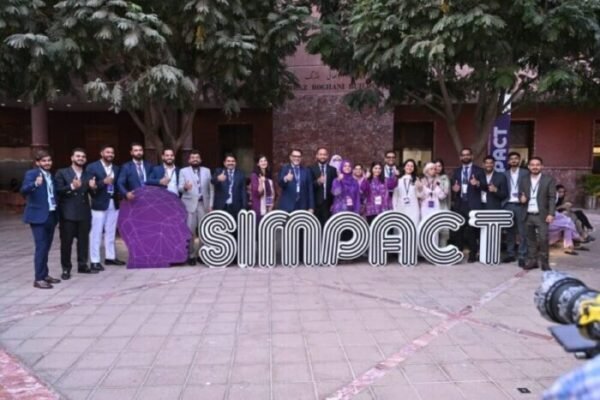
Aga Khan University’s (AKU) Centre for Innovation in Medical Education (CIME), Karachi, hosted SIMPACT 2026 on September 17, bringing artificial intelligence and emerging technologies to the forefront of healthcare simulation education.
The conference, described as the only healthcare simulation conference in Pakistan and East Africa, connected clinicians, educators, leaders, innovators and students from both regions in real time.
This year’s theme, “Simulation Reimagined: AI & Beyond,” focused on how artificial intelligence, immersive technologies, analytics and next-generation learning systems are transforming healthcare training and contributing to improved patient safety.
Research and Innovation on Display
The conference featured pre-conference workshops, more than 80 research presentations, keynote sessions and exhibitions showcasing locally developed innovations alongside the latest healthcare simulation technologies from industry.
A major highlight was SIMVENTION, an exhibition featuring locally developed, AI-powered healthcare technologies and software that demonstrated the range of innovation emerging from Pakistan.
Shortlisted projects included an Urdu-English talking avatar for medical training, a culturally sensitive chatbot for adolescent reproductive health and an AI-assisted tuberculosis screening pipeline.
AI and the Future of Healthcare Training
Professor Atta-ur-Rahman, Professor Emeritus at the University of Karachi and former Chairman of the Higher Education Commission, said artificial intelligence is already transforming healthcare in areas ranging from drug discovery and medical diagnosis to precision medicine and patient care.
He said the rapid pace of technological change also requires a rethink of how healthcare professionals are educated and prepared for the future, adding that simulation provides an important environment for developing the skills, judgment and adaptability needed in a rapidly changing healthcare landscape.
Focus on a Future-Ready Workforce
Chief Guest Dr Dabeer Ahmed Khan, Special Assistant to the Minister for Health and Population Welfare, Government of Sindh, said the strength of hospitals depends on the workforce trained to operate them.
He emphasized the importance of developing a future-ready healthcare workforce in which simulation and artificial intelligence play an increasingly important role in preparing healthcare professionals with the skills, confidence and experience required to provide safe, high-quality care.
He also highlighted the vision of Dr Azra Fazal Pechuho, Minister for Health and Population Welfare, to upgrade the skills of healthcare professionals to improve the quality of treatment in public-sector hospitals.
Strengthening Healthcare Education
AKU’s CIME centres in Karachi and Nairobi, described as the largest simulation centres in their respective regions, continue to contribute to the transformation of health education through simulation.
Dr Faisal Ismail, Conference Chair and Regional Director, CIME South Asia, said CIME has focused on using simulation to address real challenges in healthcare education and practice.
He said SIMPACT provides a platform for sharing ideas, evidence and innovation across institutions and borders, while emphasizing the role of technology and simulation in healthcare staff training, patient safety and improving the quality of care.
Keynote and Panel Discussions
The programme also featured a keynote address by Professor Thomas Thesen, Director of the AI and Digital Health Curriculum at the Geisel School of Medicine at Dartmouth.
Two panel discussions examined the future directions of artificial intelligence in healthcare.
With its two-city hybrid format and focus on AI as both a subject of study and a tool for simulation, SIMPACT 2026 highlighted emerging developments in healthcare education, training and practice in Pakistan.