





Urdu Report Desk
The federal government has approved the deployment of the Pakistan Army in Khyber Pakhtunkhwa to assist the civil administration following the imposition of emergency and governor’s rule in the province.
The Ministry of Interior issued a formal notification on Sunday, October 11, 2026, authorising the deployment for the period covered by the emergency proclamation. According to the notification, the move aims to protect citizens, government installations and public infrastructure while supporting the civil administration in maintaining law and order.
Arrest Claim Involving Chief Minister Sohail Afridi
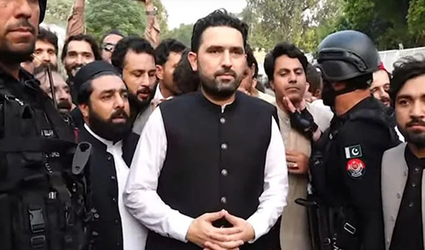
A claim has emerged that Khyber Pakhtunkhwa Chief Minister Sohail Afridi has been arrested following the imposition of emergency and governor’s rule.
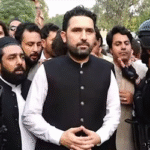
Provincial PTI President Junaid Akbar claimed on social media that both Chief Minister Sohail Afridi and Junaid Akbar had been arrested. The supplied report does not independently confirm the arrests.
According to sources cited in the report, restrictions had been imposed on meetings with the chief minister after the emergency and governor’s rule came into effect. Entry to the Chief Minister’s House was reportedly prohibited, and the number of staff members deployed there was reduced.
Federal Government Appoints New Chief Secretary
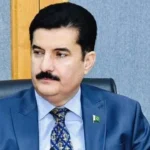
The federal government has appointed Dr Fakhr Alam as the new chief secretary of Khyber Pakhtunkhwa. An official notification announcing his appointment has also been issued.
The appointment comes as the federal government begins reorganising the provincial administrative structure following the imposition of emergency and governor’s rule.
Pakistan Army Deployment Under Constitutional Provisions
The federal government has authorised the deployment of Pakistan Army personnel under Article 245 of the Constitution to assist the civil administration in Khyber Pakhtunkhwa.
The notification states that the deployment is intended to help maintain law and order and protect the lives and property of citizens, as well as government installations.
According to the notification, the Khyber Pakhtunkhwa governor will determine the number of troops and resources required in consultation with the Military Operations Directorate at General Headquarters (GHQ).
The deployment order will be published in the Gazette of Pakistan, Part II.
Emergency and Governor’s Rule Imposed
The army deployment follows the federal government’s decision to impose emergency and governor’s rule in Khyber Pakhtunkhwa.
President Asif Ali Zardari approved the emergency proclamation under Articles 232(1) and 234(1) of the Constitution on the advice of Prime Minister Shehbaz Sharif and following a recommendation from the federal cabinet.
According to the President’s Secretariat, the decision was based on increasing terrorist incidents, deteriorating law and order, and threats to the lives and property of citizens. The statement also cited an increase in attacks on government installations, infrastructure and law enforcement agencies.
The federal government maintained that the provincial government had failed to take the required measures to prevent terrorism and lawlessness. A report submitted by the Khyber Pakhtunkhwa governor reportedly highlighted a disruption in the constitutional system.
Article 234 allows the federal government to assign some or all provincial government functions to the governor under specified circumstances, while Article 232 provides for emergency measures in exceptional situations.
11-Member Advisory Council Formed
Following the imposition of emergency and governor’s rule, the federal government established an 11-member advisory council to assist the governor in managing provincial affairs.
The council comprises Tariq Mahmood Pasha, Dr Aamir Abdullah, Lieutenant General (retd) Nigar Johar, Samar Haroon Bilour, Dr Sarfaraz Ali, Aamir Javed, Dr M Irshad, Kifayatullah, Tayyab Qureshi, Usman Saifullah Khan and Asif Rafiq.
According to the official order, the Khyber Pakhtunkhwa governor will handle provincial affairs on behalf of the federal government, with assistance from the advisory council.
The order also appointed Sanaullah Advocate as the provincial advocate general. Provincial administrative affairs will be conducted in accordance with the Government Rules of Business, 1985, and the measures have taken immediate effect.
Federal Law Minister Azam Nazeer Tarar previously said that a secretariat had been established for 12 affected districts of the province. He said the secretariat would report directly to the federal government and that an additional chief secretary would oversee the council.
Government Cites Security Concerns in 12 Districts
Interior Minister Mohsin Naqvi said the law and order situation in 12 districts of Khyber Pakhtunkhwa had deteriorated significantly, with residents in some areas reportedly reluctant to leave their homes after sunset.
Speaking at a press conference in Islamabad before the imposition of emergency and governor’s rule, Naqvi said the federal government had spent more than a month trying to bring the provincial government on board with joint counterterrorism measures.
He said the federal government had no objection to PTI’s sit-in and had never demanded that the protest be called off. According to Naqvi, the proposal to postpone the sit-in had come from the Pakistan Peoples Party, while the federal government’s main concern was cooperation against terrorism.
Naqvi said efforts had been made to meet opposition leaders and form a negotiating committee before Prime Minister Shehbaz Sharif travelled abroad. He said talks with PTI continued for two days and several amendments to a draft agreement were accepted, but the sides failed to reach a consensus after a new draft was presented at the final stage.
According to the interior minister, contact with PTI leaders continued until 11:45 pm the previous night, and they were given an opportunity to suggest further changes. However, he said, no response was received.
Naqvi also said that 518 police personnel had been killed over the preceding 18 months, adding that an increase in terrorist incidents had further worsened the security situation.
Federal Government Explains Constitutional Measures
Law Minister Azam Nazeer Tarar said the federal cabinet had held a detailed meeting to review the security situation in Khyber Pakhtunkhwa before recommending constitutional measures.
He said the cabinet had proposed that the prime minister advise the president to take action under the relevant constitutional provisions because of the increase in terrorist attacks and assaults on security personnel.
According to Tarar, the provincial governor submitted a report to the federal government, following which President Zardari approved the emergency proclamation on the prime minister’s advice.
He said the new administrative arrangements and the decision to deploy the army were intended to support the management of provincial affairs and assist the civil administration.
Information Minister Attaullah Tarar also levelled allegations against the PTI and the Khyber Pakhtunkhwa government, claiming that terrorist elements had received facilitation in the province. He said the federal government had evidence to support its position and stressed that provincial cooperation was necessary for counterterrorism operations. These statements represent the federal government’s position.
PTI Long March and Political Tensions
The imposition of emergency and governor’s rule came amid heightened tensions between the federal government and PTI over the party’s planned long march towards Islamabad and disagreements over counterterrorism policy.
PTI had been demanding the release of its founder, Imran Khan, through its protests. The federal government, meanwhile, identified security concerns and cooperation against terrorism as its principal issues in discussions with the provincial administration.
According to the supplied report, Reuters and the Associated Press reported that the federal government cited increasing terrorist incidents and disagreements with the provincial government over security policy as reasons for imposing emergency measures. PTI has opposed the move.
With the issuance of the army deployment notification, the process of assigning military personnel to assist the civil administration in Khyber Pakhtunkhwa has also begun. The government says the deployment is intended to protect citizens, public property and government installations while helping maintain law and order.