





Urdu Report Desk
Governor’s Rule has been imposed in Pakistan’s provinces at various points during political and constitutional crises. Historical records cited in the supplied material identify three prominent periods in each of Punjab, Sindh, Khyber Pakhtunkhwa and Balochistan, although Balochistan also saw another imposition in 2013.
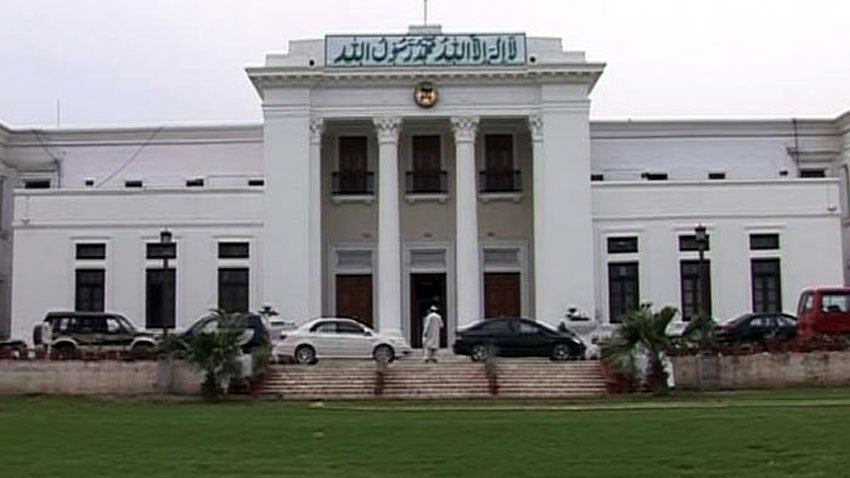
Khyber Pakhtunkhwa: Three Periods
Khyber Pakhtunkhwa, formerly known as the North-West Frontier Province, experienced Governor’s Rule three times.
The three periods were from February 16, 1975 to May 3, 1975; February 25, 1994 to April 24, 1994; and October 12, 1999 to November 30, 2002.
1975: Zulfikar Ali Bhutto’s Era
Governor’s Rule was imposed in the then North-West Frontier Province from February 16 to May 3, 1975.
At the time, the province was governed by the National Awami Party (NAP) and Jamiat Ulema-e-Islam (JUI), with Nasrullah Khan Khattak serving as chief minister.
The move came amid serious political tensions between the federal and provincial governments. Following the dismissal of the NAP government in Balochistan, the provincial government in the North-West Frontier Province resigned in protest, after which Governor’s Rule was imposed.
1994: Benazir Bhutto’s Government
Governor’s Rule was imposed in Khyber Pakhtunkhwa from February 25 to April 24, 1994, during the government of Prime Minister Benazir Bhutto.
At the time, the province was facing a political crisis and serious disagreements over the provincial government. Tensions between the federal authorities and provincial leadership eventually led to the imposition of Governor’s Rule.
The arrangement remained in place for about two months before the elected provincial government system was restored.
1999: After Pervez Musharraf Took Power
Following General Pervez Musharraf’s takeover on October 12, 1999, major changes were made to Pakistan’s political and constitutional system.
The elected provincial governments were removed and provincial administration was conducted through governors, including in Khyber Pakhtunkhwa.
Governor’s Rule in Khyber Pakhtunkhwa continued until November 30, 2002, after which the provincial political system was restored following the general elections.
Punjab: Three Major Periods
Punjab also experienced Governor’s Rule on several occasions.
The first period began on January 25, 1949 and continued until April 5, 1951. At the time, Iftikhar Hussain Khan Mamdot was chief minister and Sir Francis Mudie was governor. Abdul Rab Nishtar later also served as governor during this period.
The second period began on October 12, 1999, following General Pervez Musharraf’s takeover, and continued until November 23, 2002. During this period, Zulfiqar Khosa, Lieutenant General Safdar Hussain and Lieutenant General Khalid Maqbool served as governors.
Punjab’s third major period began on February 25, 2009. President Asif Ali Zardari imposed Governor’s Rule on the advice of Prime Minister Yousaf Raza Gilani and assigned Governor Salman Taseer responsibility for the provincial administration.
The move followed a Supreme Court decision concerning the disqualification of Nawaz Sharif and Shahbaz Sharif, which created a constitutional crisis in the province.
The arrangement lasted for about a month and ended on March 30, 2009. The Punjab Assembly was not suspended, although Chief Minister Shahbaz Sharif and members of the provincial cabinet did not remain in office during the period.
Sindh: Three Major Periods
According to the historical record cited in the supplied material, Sindh experienced three prominent periods of Governor’s Rule.
The first lasted from 1951 to 1953 during the tenure of Governor Mian Aminuddin. The second occurred in 1988 during the tenure of Lieutenant General Rahimuddin Khan, while the third took place in 1998 during the tenure of Lieutenant General Moinuddin Haider.
During these periods, provincial chief ministers were removed from office and provincial assemblies were dissolved.
In 1998, political differences between the Pakistan Muslim League-Nawaz government in Sindh and the Muttahida Qaumi Movement intensified. Following the killing of Hakim Said, political tensions increased further and Governor’s Rule was imposed.
Balochistan: Multiple Periods
Balochistan also experienced several periods of Governor’s Rule.
The first began on February 13, 1973 and continued until April 27, 1973. Nawab Akbar Khan Bugti was appointed governor at the time.
The second period lasted from December 31, 1975 to December 6, 1976.
The third began on October 12, 1999 and continued until December 1, 2002, following the political changes that accompanied General Pervez Musharraf’s takeover.
Balochistan in 2013
Balochistan saw another major constitutional intervention in January 2013 following severe unrest and bomb attacks in Quetta.
On January 13, 2013, Prime Minister Raja Pervez Ashraf announced the imposition of Governor’s Rule under Article 234. The government of Chief Minister Nawab Aslam Raisani was removed, while Governor Nawab Zulfiqar Magsi was given responsibility for administering the province.
A joint sitting of Parliament was also called for parliamentary approval of the move, as required under the constitutional procedure cited for Article 234.
Constitutional Basis of Governor’s Rule
Under Pakistan’s current constitutional framework, Governor’s Rule is commonly associated with Article 234, which deals with failure of constitutional machinery in a province.
Under the provision, if the President, after receiving a report from the Governor, is satisfied that the provincial government cannot be carried on in accordance with the Constitution, the President may issue a proclamation.
Article 234 allows the President to assume all or some of the functions of the provincial government or direct the Governor to exercise those functions on the President’s behalf.
Current Debate in Khyber Pakhtunkhwa
The possibility of Governor’s Rule in Khyber Pakhtunkhwa has become part of political debate in September 2026, with various statements emerging from the federal government.
On September 23, 2026, Federal Information Minister Attaullah Tarar said the federal government had no intention of imposing Governor’s Rule in Khyber Pakhtunkhwa.
The historical record shows that provincial administration has been taken over through different constitutional and political arrangements at various points in Pakistan’s history. Any move in Khyber Pakhtunkhwa would have to be considered in light of the relevant constitutional provisions, legal procedures and parliamentary requirements.