








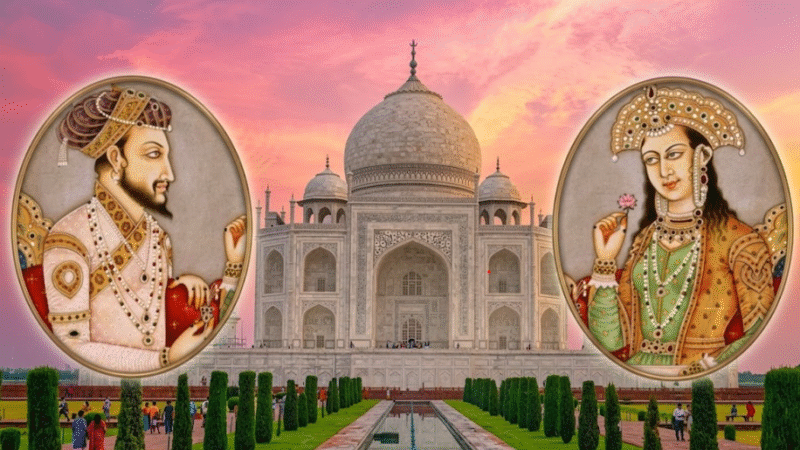
By Urdu Report Editorial Team
Mumtaz Mahal’s life came to an end during the birth of her 14th child. According to historian Qazwini, Mumtaz Mahal had illuminated the world through her children like the moon, but while giving birth to her final child, her own life began to fade. Her condition deteriorated because of severe blood loss, and she died at the age of 38.
Her death was not merely the passing of a queen. It marked the loss of a mother, a devoted wife and a central figure of the Mughal royal household. Mumtaz Mahal’s death left Shah Jahan so devastated that the powerful emperor appeared overwhelmed by grief and helplessness.
After her death, Shah Jahan reportedly abandoned colorful clothing and began wearing white. He also stayed away from public appearances for several days. Court historian Abdul Hamid Lahori described the intensity of his grief and recorded that the emperor frequently visited his beloved wife’s grave and wept.
Mumtaz Mahal was initially buried in Burhanpur, but Shah Jahan was unwilling to accept that her final resting place would remain there. He therefore decided to build a grand memorial beside the Yamuna River in Agra that would preserve the story of their love and separation for centuries.
That vision eventually became the Taj Mahal.
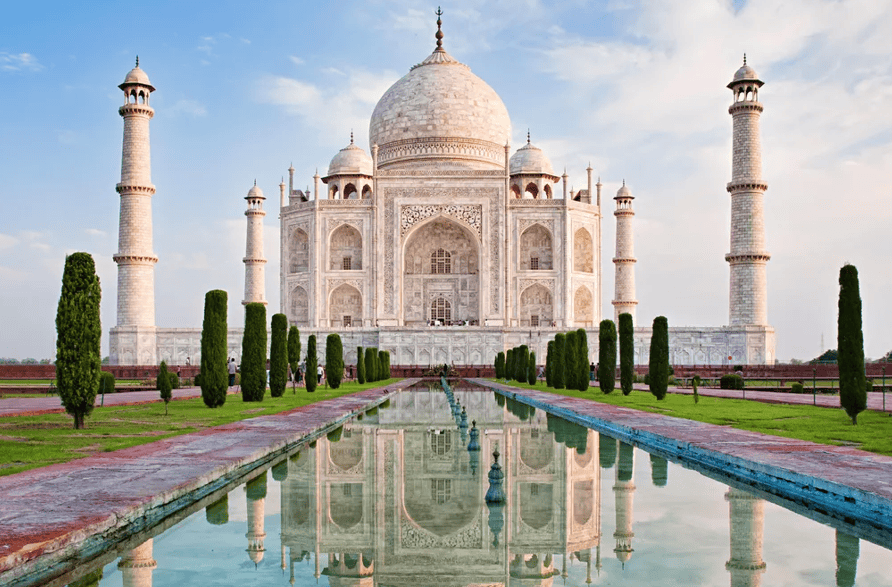
The Taj Mahal and the Story Behind It
The Taj Mahal has long been regarded as one of the world’s greatest symbols of love. Built from white marble, the magnificent mausoleum attracts millions of visitors, but behind its beauty lies a story involving love, power, politics, sacrifice and a tragic death.
The Taj Mahal stands on the banks of the Yamuna River in Agra, in India’s Uttar Pradesh state. Around 20,000 workers and 1,000 elephants are said to have been involved in its construction. The central structure was completed by 1645, while decoration and other finishing work continued for roughly another decade.
Who Were Shah Jahan and Mumtaz Mahal?
Shah Jahan, the fifth ruler of the Mughal Empire, was formally known as Shahab-ud-Din Muhammad Shah Jahan I. Some historical works also record his name as Mirza Shahab-ud-Din Baig Muhammad Khan Khurram. He was born on January 5, 1592, ascended the throne in 1628 and ruled the Indian subcontinent until 1658.
Mumtaz Mahal was born Arjumand Banu Begum on April 27, 1593, in Agra. Her father, Abul Hasan Asaf Khan, was one of the prominent nobles of the Mughal court. She was also the niece of Empress Nur Jahan.
Arjumand Banu married Prince Khurram on April 30, 1612. It was her first marriage and Prince Khurram’s third. After their marriage, Khurram gave her the title Mumtaz Mahal, meaning “the distinguished one of the palace.”
Mumtaz Mahal and the Imperial Seal
Historical accounts describe Mumtaz Mahal not only as Shah Jahan’s most beloved wife but also as his close confidante and adviser. Shah Jahan is said to have consulted her on family and administrative matters, and she was included in discussions concerning important decisions.
Some historians have gone further, suggesting that her influence extended informally into important affairs of the empire. She was also reportedly permitted to use the imperial seal, an exceptional honor within the Mughal Empire.
Mumtaz Mahal was not known for seeking political power or expressing extraordinary ambitions. Instead, she reportedly used her influence to assist the poor and needy.
Shah Jahan faced political challenges as well as family rivalries and struggles for power during his reign. Amid tensions within the royal family, particularly among the princes, Mumtaz Mahal remained by his side.
A Companion on Military Campaigns
Another distinctive aspect of Mumtaz Mahal’s life was that she was not confined to the royal palace.
Whenever Shah Jahan traveled to deal with rebellions or undertake military campaigns, Mumtaz Mahal often accompanied him. She advised him, supported him and took steps to help him through difficult circumstances.
She enjoyed privileges that were unusual compared with those of other royal wives. Shah Jahan spent much of his time with her, and her position within the palace was regarded as particularly prominent.
Her 14th Child and Tragic Death
Shah Jahan and Mumtaz Mahal had 14 children during their married life. Repeated pregnancies and childbirths took a heavy toll on Mumtaz Mahal’s health.
On June 17, 1631, complications developed during the birth of her 14th child in Burhanpur. After a labor lasting around 30 hours, she gave birth to a daughter, Gauhar Ara Begum. However, severe blood loss caused her condition to deteriorate.
Mumtaz Mahal, whose real name was Arjumand Banu Begum, died unexpectedly on June 17, 1631. Her death plunged the royal household into mourning and deeply shocked Shah Jahan.
She was 38 years old.
Grief That Transformed an Emperor
Mumtaz Mahal’s death profoundly changed Shah Jahan’s life. Historical accounts say that he withdrew from many worldly activities following her death.
He began wearing white clothes, lost interest in music and, according to some court accounts, his prolonged grief affected his eyesight. His hair reportedly turned white rapidly, and he struggled to overcome the loss for a long time.
The Construction of the Taj Mahal
Determined to preserve the memory of his beloved wife, Shah Jahan ordered the construction of a monument that would stand as a lasting testament to their relationship.
Mumtaz Mahal was initially buried in Burhanpur before her remains were transferred to Agra. The Taj Mahal was subsequently built beside the Yamuna River.
Historian Jadunath Sarkar wrote in his book Studies in Mughal India that Mumtaz Mahal had obtained a promise from Shah Jahan before her death that he would build a magnificent mausoleum in her memory.
Around 20,000 workers and 1,000 elephants were involved in the construction. The central building was completed by 1645, while decoration and finishing work continued for another 10 years.
The approximately 42-acre complex includes the main mausoleum, a mosque, a guest house, gardens and other structures. The project reportedly cost around 35 million rupees at the time, a figure considered equivalent to billions of rupees in today’s value.
In 1983, UNESCO designated the Taj Mahal as a World Heritage Site.
Another Side of Their Relationship
Although the relationship between Shah Jahan and Mumtaz Mahal is often portrayed as a great romantic love story, some historians have presented another side of their marriage.
Some historical accounts suggest that Mumtaz Mahal faced physical and emotional difficulties associated with repeated pregnancies and childbirth, and that disagreements over the issue may have emerged over time.
Some researchers believe Mughal chroniclers emphasized the positive aspects of the relationship while giving comparatively little attention to internal tensions and personal difficulties.
An Indian television drama titled Shah Jahan Aur Mumtaz, produced in 2014, also attempted to highlight some of these lesser-known aspects.
Shah Jahan’s Wives
After Mumtaz Mahal’s death, Shah Jahan’s life was reportedly marked by loneliness and grief that remained with him until his death.
According to historian Dr Muhammad Abdullah Chughtai, although Mughal emperors are commonly associated with having numerous wives, Shah Jahan married only three times and did not marry again after Mumtaz Mahal’s death.
He reportedly spent the remainder of his life as a grieving and lonely man, with the memory of his beloved wife remaining alive in his heart.
Historical accounts state that Shah Jahan’s first marriage was to Kandahari Begum, with whom he had a daughter. He later married Izz-un-Nissa Begum, with whom he had a son, although both children died at a young age.
Mumtaz Mahal, meanwhile, was not only his most beloved wife but also his adviser and confidante. This may help explain why Shah Jahan did not turn to another marriage after her death and spent his remaining years living with her memory.
A Symbol of Love ، or a Mother’s Sacrifice?
Today, the Taj Mahal is widely regarded as one of the world’s most beautiful monuments to love. However, some historians and medical experts also view Mumtaz Mahal’s story as a reminder of the dangers women faced during childbirth.
Mumtaz Mahal experienced repeated pregnancies, and the physical demands of childbirth are said to have weakened her over time. Ultimately, her 14th childbirth became the final chapter of her life.
For this reason, some observers argue that the Taj Mahal represents more than Shah Jahan’s love. They see it as a memorial to a woman whose life was largely devoted to her family, husband and children.
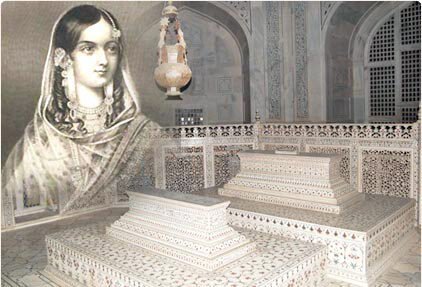
Shah Jahan died on January 22, 1666, and was buried beside Mumtaz Mahal inside the Taj Mahal. Their graves remain together within the mausoleum, while the Taj Mahal continues to be recognized around the world as an enduring symbol of love, separation, sacrifice and history.