










By: Tariq Iqbal Chaudhry

Ceuta: Where the 1,300-Year-Old Story of the Strait of Gibraltar, Tariq ibn Ziyad, and Al-Andalus Begins
Whenever illegal migration to Europe is discussed, the name of Spain’s North African city of Ceuta and the Strait of Gibraltar inevitably comes up. In recent years, thousands of migrants from Morocco have entered this very city. But Ceuta is not just a border town — the history attached to it takes us back nearly thirteen hundred years, to where the Strait of Gibraltar, Tariq ibn Ziyad, Al-Andalus, and the grand story of Islamic civilization all begin. This is the same Strait of Gibraltar through which the great Muslim commander Tariq ibn Ziyad entered and burned his ships.
Where Is Ceuta Located?
Ceuta is a small but strategically vital city on the North African coast. Geographically, it borders Morocco, but politically it is an autonomous city of Spain. This makes Ceuta a unique border point between Europe and Africa.
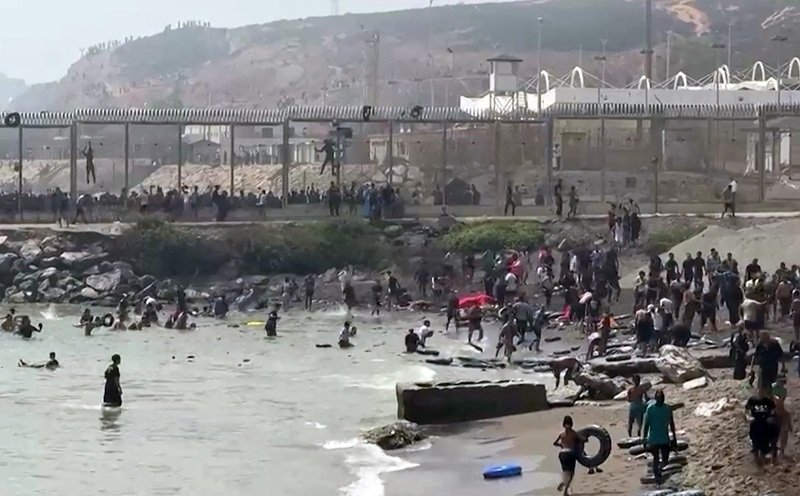
There is a land border between Morocco and Ceuta, which is why some migrants attempt to cross the border fence or swim across the sea to reach the city. However, reaching Ceuta does not mean migrants can travel freely across the rest of Europe, since strict immigration laws apply for entry into mainland Spain.
The Strait of Gibraltar: A Narrow Passage Between Two Continents
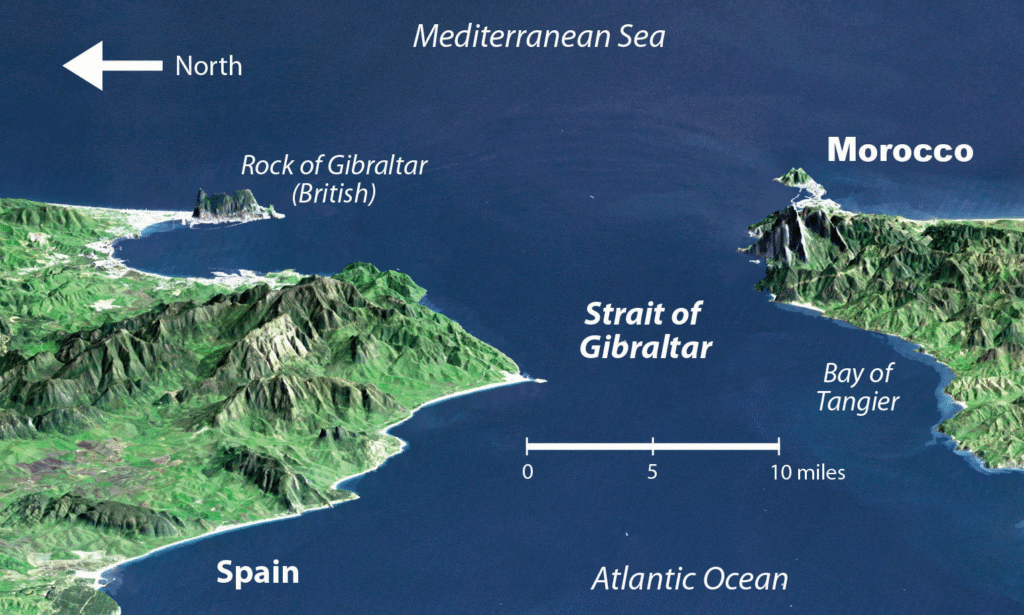
Near Ceuta lies the world-famous Strait of Gibraltar, which connects the Atlantic Ocean to the Mediterranean Sea.
The strait is at least about 14 kilometers wide. Spain and Gibraltar lie to the north, while Morocco lies to the south. Thousands of commercial and military vessels pass through this route every year, making it one of the world’s most important strategic maritime routes.
How Did Gibraltar Get Its Name?
Gibraltar is named after a great figure in Islamic history — Tariq ibn Ziyad.
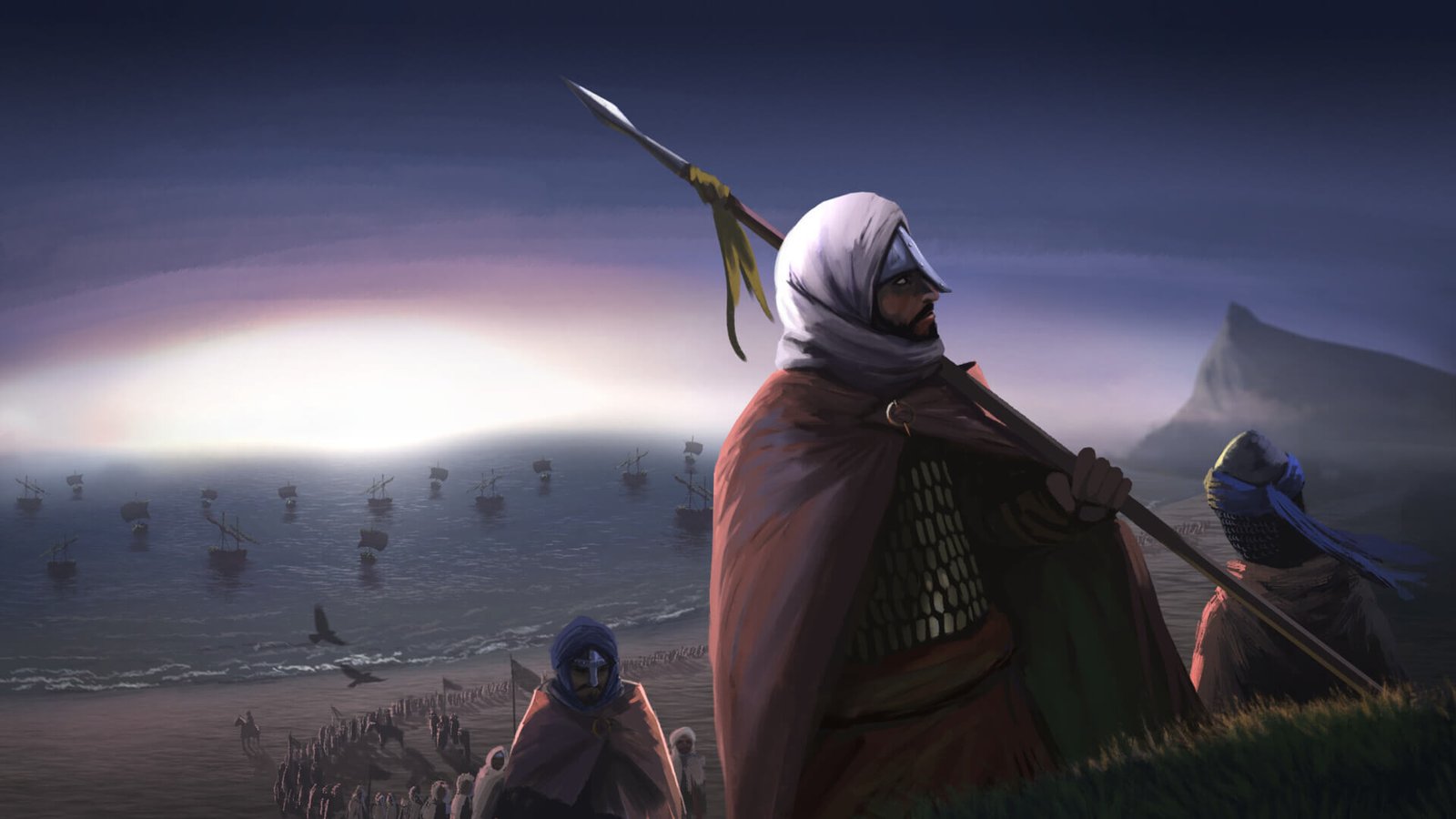
In 711 CE, during the era of the Umayyad Caliphate, Musa ibn Nusayr, the governor of North Africa, sent Tariq ibn Ziyad on a campaign to the Iberian Peninsula. According to historical accounts, his army set sail by boat from present-day Tangier and its surrounding areas, crossed the Strait of Gibraltar, and landed at the foot of a mountain that later came to be known as Jabal Tariq ("Tariq’s Mountain”) — Gibraltar.
At that time, modern nation-states such as Morocco and Spain did not exist. These regions were instead under the influence of the Umayyad Caliphate, local rulers, and various kingdoms.
When Tariq ibn Ziyad set foot on Gibraltar in 711 CE, present-day Spain was not a unified state. At that time the region was known as the Iberian Peninsula, and most of it was ruled by the Visigothic Kingdom under King Roderic. Tariq ibn Ziyad defeated this kingdom and laid the foundation of Al-Andalus, which later became a great center of Islamic civilization, learning, and culture.
Who Was Tariq ibn Ziyad?
In Islamic history, Tariq ibn Ziyad will always be remembered as the great conqueror of Al-Andalus. According to one account, he belonged to a Berber tribe of North Africa, while some historians trace his origins to Hamadan in Iran or the Hadhramaut region of Yemen. It is generally accepted that Tariq ibn Ziyad was born around 675 CE in the western region of present-day Algeria, in Wahran (Oran).
Under the Umayyad Caliph Walid ibn Abd al-Malik, he emerged as a prominent commander in the army of Musa ibn Nusayr, and thanks to his military abilities, he was soon appointed governor of Tangier. In 711 CE, he crossed the Strait of Gibraltar and set foot on the Iberian Peninsula, beginning the conquest of Al-Andalus. For nearly eight centuries afterward, Muslim rule turned Al-Andalus into a world center of knowledge, art, philosophy, medicine, and civilization.
conflicting about Tariq ibn Ziyad’s life
Several conflicting accounts exist about Tariq ibn Ziyad’s life after the conquest of Al-Andalus. It is said that after the conquests, differences arose between him and Musa ibn Nusayr, after which both were summoned to Damascus, and Caliph Walid ibn Abd al-Malik eventually removed them from their positions. Some historical accounts also claim that Tariq ibn Ziyad spent his final days in extreme poverty.
Tariq ibn Ziyad — The Conqueror of Spain
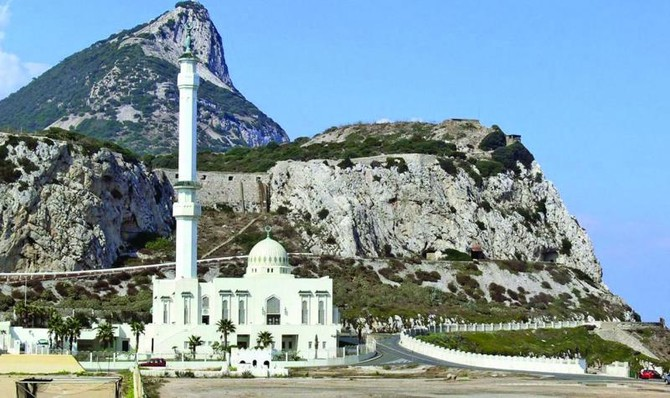
There is a historic King Fahd Mosque located in Gibraltar (Al-Andalus region), built under the patronage of Saudi Arabia’s King Fahd. Some associate it with the memory of the Muslim commander Tariq ibn Ziyad, since according to historical accounts he set foot in this very area with his army in 711 CE, beginning the conquest of Al-Andalus from here.
When Tariq ibn Ziyad Burned the Ships
The most famous legend about Tariq ibn Ziyad is that after reaching Al-Andalus, he ordered his ships burned so his soldiers would abandon any thought of retreat. However, some historians dispute this account. Jabal Tariq (Gibraltar), on the edge of the strait, still stands today as his memorial. In 2012, the Bank of England issued a five-pound banknote for the Gibraltar government featuring an image of Tariq ibn Ziyad — considered recognition of his historical role and global significance.
Some historical accounts also claim that Tariq ibn Ziyad spent his final days in poverty, even reportedly seen begging outside mosques — though there is no strong or reliable historical evidence supporting this claim. Most modern historians consider these accounts weak, while there is general agreement that Tariq ibn Ziyad died around 720 CE.
How Did Tariq ibn Ziyad Enter Spain?
According to historical evidence, in 711 CE Tariq ibn Ziyad set sail with his army by boat from present-day Tangier and its nearby coastal areas, crossed the Strait of Gibraltar, and landed at the site of present-day Gibraltar. From there, he advanced into southern Spain — Al-Andalus — defeating the Visigothic King Roderic and beginning the conquest of Al-Andalus.
Although Ceuta is also located near the Strait of Gibraltar, and according to some historical accounts its governor, Count Julian, provided ships to the Muslims.
How Did the Strait of Gibraltar Get Its Name?
Even today, this sea passage is known worldwide as the Strait of Gibraltar, with "Strait of Gibraltar” as its official English name. It was named in memory of the Muslim commander Tariq ibn Ziyad, who crossed it from North Africa in 711 CE to begin the conquest of Al-Andalus.
The mountain stands at about 426 meters (1,398 feet) high, and the entire sea passage is named after it. According to historical accounts, Tariq ibn Ziyad landed at this very spot with his army in 711 CE, after which the mountain was named Jabal Tariq — "Tariq’s Mountain” — which over time evolved into "Gibraltar” in European languages.
What Was Al-Andalus?
Following Tariq ibn Ziyad’s conquest, Muslims established rule over most of the Iberian Peninsula, known as Al-Andalus. It was not merely a city in present-day Spain but a vast region that included much of today’s Spain and Portugal.
Later, cities such as Córdoba, Seville, Granada, and Málaga became global centers of knowledge, art, philosophy, medicine, mathematics, and architecture. Córdoba’s great libraries, the Alhambra Palace, and Seville’s scholarly tradition still recall the golden age of Islamic civilization today. Muslim rule, across various periods, lasted from roughly 711 CE to 1492 CE — nearly eight centuries.
The History of Ceuta and Tangier
Ceuta and Tangier are two historic cities on the North African coast of the Strait of Gibraltar that played important roles in Islamic history and the conquest of Al-Andalus. Tangier today is a major port city in Morocco, and according to historians, Tariq ibn Ziyad began his Andalusian campaign in 711 CE by crossing the Strait of Gibraltar with his army from here and the surrounding coastal areas. Ceuta, meanwhile, lies about 70 to 80 kilometers from Tangier.
Geographically, it is in North Africa, but politically it is today an autonomous city administered by Spain. Ceuta too was under Muslim rule during various periods; however, in 1415 Portugal seized it, and it later passed to Spain, while Morocco still maintains its claim over it today.
How Did Ceuta Come Under Spain?
Ceuta’s history differs from that of Al-Andalus. In 1415, Portugal seized Ceuta. Later, in 1580, Portugal and Spain came under a single crown. When Portugal regained its independence in 1640, Ceuta chose to remain with Spain rather than Portugal.
Ultimately, under the 1668 Treaty of Lisbon, Portugal recognized Spanish sovereignty over Ceuta, and the city remains under Spanish administration to this day — although Morocco continues to maintain its claim over it.
The Situation Today
Migrants attempting to enter Ceuta from Morocco today generally use three methods. The most common is the land border, where groups attempt to collectively scale the tall steel fence between Morocco and Ceuta. The second method is entry by sea, where some individuals attempt to reach Ceuta’s coast by swimming, using rubber boats, or improvised flotation devices.
The third method is attempting entry through the legal border crossing, where some arrive with valid travel documents, while others attempt to use forged documents or other illegal means.
History Still Lives On Today
Today, when migrants from Morocco attempt to cross the Ceuta border, the world’s attention turns to this small city. Yet this very region was also, thirteen hundred years ago, where a chapter of Islamic history began — when Tariq ibn Ziyad set out from North Africa, crossed the Strait of Gibraltar, and laid the foundation of a new civilization in Al-Andalus.