







TEHRAN: Iran has maintained a hardline position on the reopening of the Strait of Hormuz, making clear that the strategic waterway will only be fully restored to normal operations if the United States accepts six conditions put forward by Tehran.
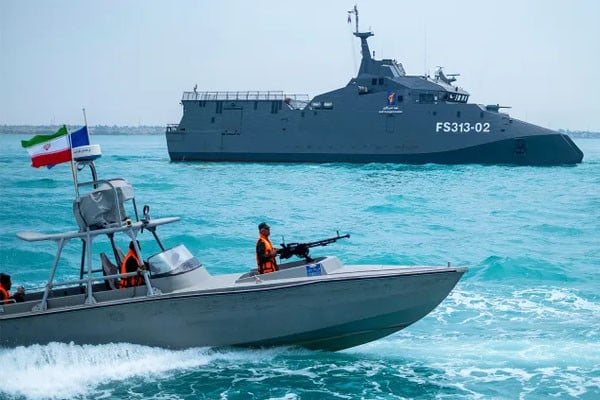
A spokesman for Iran’s Islamic Revolutionary Guard Corps (IRGC), Hossein Mohebbi, said the Strait of Hormuz was not merely a commercial shipping route for Iran but also an important geopolitical and strategic asset over which Tehran exercises decisive authority.
According to Mohebbi, the United States would have to accept Iran’s conditions for the Strait of Hormuz to be fully reopened. He also warned against any outside interference in the ongoing talks with Oman, saying negotiations with Muscat had entered their final stages.
Iran and Oman Continue Negotiations
Meanwhile, Iran and Oman are negotiating new arrangements for the movement of commercial vessels through the Strait of Hormuz. Omani officials have described the discussions as positive and constructive.
Iranian Foreign Minister Abbas Araghchi has also confirmed that negotiations with Oman have reached a decisive stage. However, he stressed that reaching an understanding with Muscat would not automatically mean that the Strait of Hormuz would be fully reopened immediately.
According to Araghchi, discussions are continuing over the route to be used by maritime traffic through the strait, as well as the legal procedures and administrative arrangements governing its operation.
He said that because of technical and legal complexities, Iran and Oman were currently considering a temporary shipping route that could later serve as the basis for a main maritime corridor.
What Are Iran’s Six Conditions?
Mohammad Bagher Zolqadr, secretary of Iran’s Supreme National Security Council, has outlined conditions linked to the restoration of normal operations in the Strait of Hormuz.
The demands include:
- Easing sanctions imposed on Iran
- Compensation for war-related damages
- Ending the naval blockade of Iranian ports
- Halting threats against Iran
- Restoring Iran’s frozen assets
- Addressing other outstanding commitments and measures demanded by Tehran
Analysts say the demands largely reflect Iran’s previously stated position. However, presenting them as preconditions for the full reopening of the Strait of Hormuz indicates that Tehran is maintaining a particularly firm stance in the negotiations.
Final Approval Expected From Iran’s Supreme National Security Council
Barak Ravid, a reporter for the U.S. news website Axios, previously cited a diplomat from a mediating country as saying that Iranian negotiators were waiting for approval from Iran’s Supreme National Security Council before finalizing a potential agreement with Oman and the United States.
According to the report, the approval was expected to come soon.
The development is significant because Mohammad Bagher Zolqadr is the secretary of the same institution and, according to reports, any major decision concerning an agreement over the Strait of Hormuz is expected to pass through Iran’s senior national security decision-making structure.
Meanwhile, speculation has also emerged over Zolqadr’s possible resignation from his position. Reports have suggested that he submitted his resignation, but Iranian President Masoud Pezeshkian opposed the move and asked him to continue carrying out his responsibilities.
Washington Expects a Possible Agreement
A foreign news agency, citing a U.S. official, reported that progress had been made in talks between Iran and Oman concerning the Strait of Hormuz.
U.S. officials reportedly expect an agreement to be reached soon.
According to the report, Washington could consider ending the naval blockade of Iranian ports following the announcement of a possible agreement.
However, statements from Iranian officials indicate that Tehran does not view the normalization of the Strait of Hormuz as an issue that can be resolved solely through an administrative arrangement with Oman.
New Shipping Route for Strait of Hormuz Under Consideration
Iran and Oman are also discussing a new mechanism under which a designated route could be established for commercial vessels passing through the Strait of Hormuz.
Under the proposed arrangement, the two countries could jointly oversee the route’s administration and financial management. A system for charging fees to vessels using the route is also reportedly under consideration.
If finalized, such an arrangement would represent a limited and interim development rather than a comprehensive resolution of the wider confrontation between Iran and the United States.
Nevertheless, it could provide a pathway toward restoring commercial shipping through the Strait of Hormuz and reducing the current tensions.
Oman Calls for Protection of Shipping
Oman has also described the negotiations over maritime traffic through the Strait of Hormuz as positive.
In a statement issued on Saturday, Oman’s Foreign Ministry condemned what it described as continued attacks on vessels passing through the Strait of Hormuz, although it did not directly name any country as responsible.
The ministry said negotiations concerning the mechanisms governing navigation through the Strait of Hormuz were taking place in a positive and constructive atmosphere.
Oman urged all parties involved to avoid actions that could undermine the progress achieved during the negotiations.
U.S. Vice President Claims Iran’s Nuclear Program Has Been Destroyed
Meanwhile, U.S. Vice President JD Vance has claimed that the United States has destroyed Iran’s nuclear program and significantly weakened the country’s conventional military capabilities.
In an interview with Fox News, Vance said that U.S. military operations had also substantially reduced Iran’s unconventional military capabilities.
According to the U.S. vice president, Washington is assessing whether Tehran is prepared to make long-term changes that could lead to improved relations between Iran and the United States.
He warned that if Iran was unwilling to make such changes, the United States would continue applying pressure on Tehran.
Vance also said the U.S. government was seeking to increase oil and gas production in the Middle East in an effort to expand energy supplies and reduce fuel and energy costs for American consumers.
Why Is the Strait of Hormuz So Important?
The Strait of Hormuz is one of the world’s most strategically important maritime chokepoints and plays a crucial role in the transportation of global energy supplies.
As a result, any significant restriction or disruption to shipping through the strait could have an immediate impact on global oil prices, energy markets and international trade.
The ongoing negotiations between Iran and Oman appear to be paving the way for a possible interim maritime arrangement. However, Tehran’s conditions for the United States indicate that the full restoration of normal shipping through the Strait of Hormuz remains far from settled.
While Oman and Iran continue searching for a practical solution to maritime traffic, Tehran is simultaneously insisting that Washington address its broader political and economic demands.
The situation therefore remains finely balanced between efforts to restore commercial navigation through one of the world’s most important waterways and the wider political confrontation between Iran and the United States.