Bhagat Singh of Lyallpur: The Revolutionary Who Asked to Be Shot Instead of Hanged
06/08/2026
0 Comments
92 Views
By Tariq Iqbal Chaudhry From the village of Banga in Lyallpur (now Faisalabad) to the gallows of Lahore Central Jail, this is the story of a young revolutionary who, at just 23 years of age, gave new energy to the Indian independence movement. Nearly a century later, Bhagat Singh continues to be remembered with respect […]
Share This Article:
By Tariq Iqbal Chaudhry
From the village of Banga in Lyallpur (now Faisalabad) to the gallows of Lahore Central Jail, this is the story of a young revolutionary who, at just 23 years of age, gave new energy to the Indian independence movement. Nearly a century later, Bhagat Singh continues to be remembered with respect in both Pakistan and India.
The Evening That Changed History
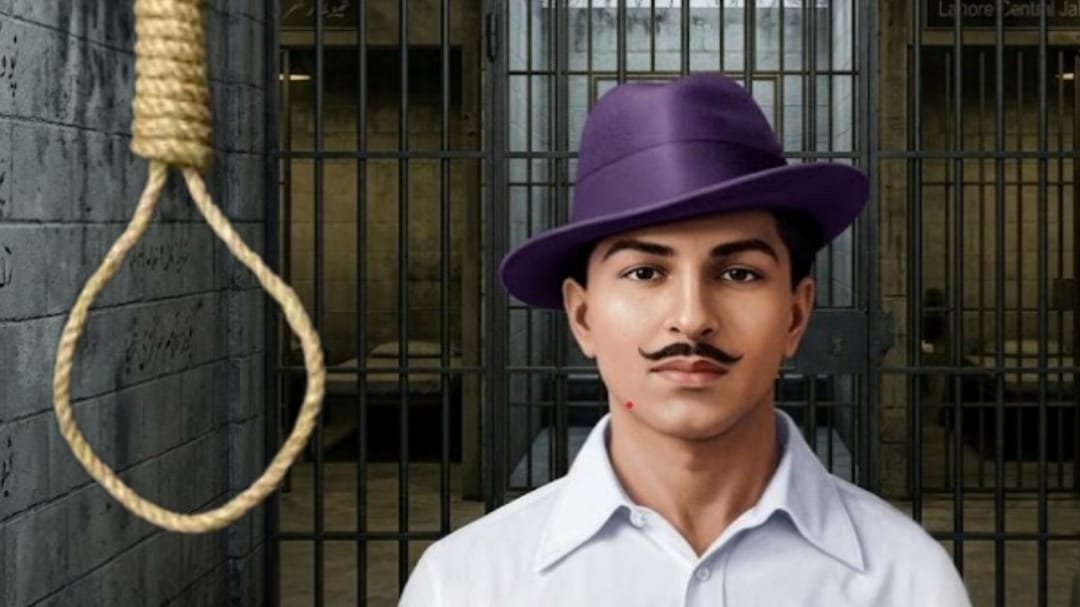
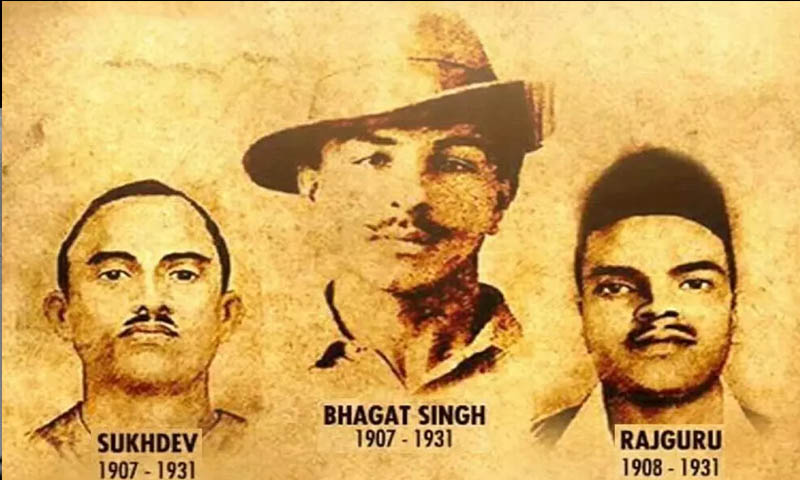
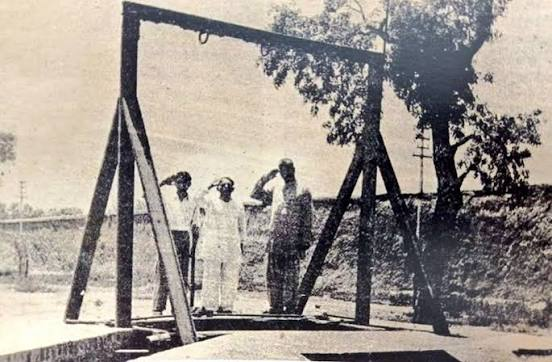
The evening of March 23, 1931, was unlike any other under British rule. Behind the towering walls of Lahore Central Jail, three young revolutionaries awaited their execution. Among them were Bhagat Singh, Sukhdev Thapar, and Shivaram Hari Rajguru, who had openly challenged British colonial rule.
Executions in British prisons were traditionally carried out before sunrise. However, on this occasion, the authorities broke with tradition. The three revolutionaries were taken to the gallows after sunset so that the large crowds gathered outside the prison would remain unaware of the execution until it had already taken place.
The execution was supervised by Major P. D. Chopra, the Chief Superintendent of Lahore Central Jail, while Deputy Jail Superintendent Muhammad Akbar Khan reportedly struggled to control his emotions. According to historical accounts, Bhagat Singh walked calmly between his two companions. There was no fear on his face. Instead, he quietly recited the famous verse:
"Even after death, my love for my homeland will never fade; even my ashes will carry the fragrance of my motherland.”
The Final Request
Upon reaching the gallows, Bhagat Singh and his companions repeated one final request. They asked the British authorities to treat them as political prisoners and execute them by firing squad instead of hanging them like ordinary criminals.
The British government rejected the request.
When Bhagat Singh Kissed the Noose
Historical accounts state that Bhagat Singh kissed the noose before placing it around his own neck. Moments later, Sukhdev and Rajguru met the same fate.
Fearing public outrage, the British authorities secretly removed the bodies instead of handing them over to their families. Under the cover of darkness, the bodies were taken through the rear wall of Lahore Central Jail by truck to the banks of the Sutlej River, where officials attempted to perform hurried cremations.
However, local villagers learned of the incident. After the police left, they collected the ashes and the remaining human remains and performed the final rites according to the revolutionaries’ religious traditions.
Public Anger Across the Subcontinent
News of Bhagat Singh’s execution spread rapidly throughout the Indian subcontinent, triggering grief and outrage.
Lahore observed a complete shutdown. Markets remained closed, and thousands of people poured into the streets.
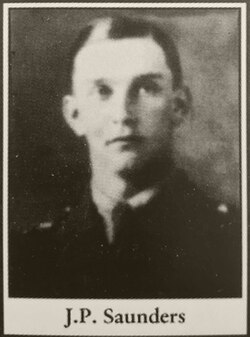
A massive funeral procession began from Neela Gumbad and passed near the location where Assistant Superintendent John P. Saunders had been assassinated several years earlier. The procession stretched for nearly three miles and brought together Hindus, Muslims, and Sikhs in a rare display of unity.
Men wore black armbands while women dressed in black saris in mourning.
When the procession reached Anarkali Bazaar, an announcement was made that the ashes of Bhagat Singh and his companions had arrived from Ferozepur. Soon afterward, three flower-covered coffins joined the procession, plunging the city into mourning.
Maulana Zafar Ali Khan, Faiz Ahmed Faiz and Charat Singh
At the memorial gathering, renowned journalist and poet Maulana Zafar Ali Khan recited a poem condemning the British authorities for abandoning the half-burned bodies of Bhagat Singh and his companions under the open sky without dignity.
Meanwhile, Charat Singh, a warder at Lahore Central Jail who had witnessed countless executions during his career, was unable to control his emotions.
According to historical accounts, he quietly returned to his room and broke down in tears. Later, he admitted that although he had seen many people face death, he had never witnessed anyone embrace it with the courage and smile displayed by Bhagat Singh, Sukhdev, and Rajguru.
On December 17, 1928, when Bhagat Singh and his associates attacked British police officer John P. Saunders in Lahore, the young Faiz Ahmed Faiz was residing at the New Hostel of Government College Lahore, located close to the scene. Some historical narratives suggest that Faiz witnessed the incident from his residence.
Early Life of Bhagat Singh
Bhagat Singh was born on September 28, 1907, in the village of Banga, then part of Lyallpur District (now Faisalabad, Pakistan), into a Sikh family.
His father, Kishan Singh, and his uncle, Ajit Singh, were already active in the struggle against British rule.
After completing his early education in his native village, Bhagat Singh enrolled at National College Lahore, where his political awareness deepened.
Fluent in Urdu, Hindi, Punjabi (Gurmukhi), English, and Sanskrit, Bhagat Singh was profoundly influenced by the Jallianwala Bagh massacre and other acts of British repression. These events inspired him to dedicate his life to revolutionary politics and the cause of independence.
The Death of Lala Lajpat Rai and the Assassination of Saunders
In 1928, when the British government sent the Simon Commission to India, protests erupted across the country because the commission included no Indian members.
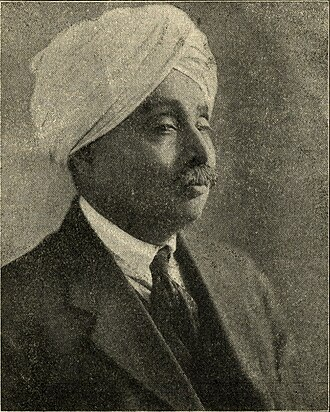
In Lahore, the demonstrations were led by the prominent nationalist leader Lala Lajpat Rai, widely known as the "Lion of Punjab” (Punjab Kesari). During a police baton charge ordered to disperse the protesters, Lajpat Rai suffered severe injuries and died a few weeks later.
His death deeply shocked the young revolutionaries, particularly Bhagat Singh, who vowed to avenge him.
The Secret Meeting
Following Lala Lajpat Rai’s death, a secret meeting was held in Lahore. It was attended by Bhagat Singh, Sukhdev Thapar, Shivaram Hari Rajguru, Chandra Shekhar Azad, Jai Gopal, and several other members of the revolutionary movement.
The group decided to assassinate James A. Scott, the police superintendent who was believed to have ordered the baton charge that fatally injured Lala Lajpat Rai.
However, on December 17, 1928, the plan went wrong due to mistaken identity. Instead of Scott, the revolutionaries shot and killed Assistant Superintendent of Police John P. Saunders outside the Lahore District Police Headquarters.
After carrying out the attack, the revolutionaries moved toward D.A.V. College, where Chandra Shekhar Azad had positioned himself to provide cover.
During their escape, a police head constable named Channan Singh pursued them. Rajguru shot him, allowing the group to escape safely.
The following morning, bright red posters appeared across Lahore carrying a bold message:
"Saunders is dead. Lala Lajpat Rai has been avenged.”
For the revolutionaries, the mission they had undertaken to avenge their beloved leader had been accomplished.
Escape from Lahore
The assassination of Saunders triggered one of the largest police crackdowns in Lahore under British rule. Roadblocks were established throughout the city, and an extensive manhunt began.
To evade arrest, Bhagat Singh made a dramatic change to his appearance. He cut his long hair and shaved his beard—an extraordinary step for a Sikh—which made him almost unrecognizable.
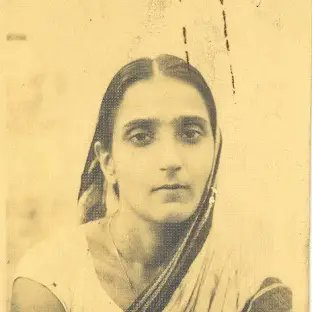
A key role in his escape was played by Durga Devi Vohra, better known as Durga Bhabhi, the wife of revolutionary Bhagwati Charan Vohra.
Risking her own life, Durga Bhabhi disguised herself as Bhagat Singh’s wife, while Bhagat Singh posed as a respectable gentleman. Rajguru accompanied them disguised as a household servant.
The trio successfully boarded a train and escaped from Lahore despite the intense police search.
Who Was Durga Bhabhi?
Durgawati Devi (October 7, 1907 – October 15, 1999), popularly known as Durga Bhabhi, was one of the most courageous women of the Indian revolutionary movement against British colonial rule.
She was among the few women who actively participated in the armed struggle for independence.
Her most celebrated contribution came after the assassination of Saunders, when she disguised herself as Bhagat Singh’s wife and traveled with him by train, enabling him to escape the British police.
Durga Bhabhi was married to Bhagwati Charan Vohra, an active member of the Hindustan Socialist Republican Association (HSRA). Because of this relationship, fellow revolutionaries respectfully addressed her as "Bhabhi” (sister-in-law)—a title that eventually became her enduring identity in the history of India’s revolutionary movement.
The Revolutionaries Decide to Protest
Following Saunders’ assassination, the revolutionaries decided to launch a dramatic protest against the British government’s repressive legislation—one that would echo across the entire subcontinent.
On April 8, 1929, Bhagat Singh and Batukeshwar Dutt entered the Central Legislative Assembly in Delhi. Among those present in the chamber were prominent political leaders, including Muhammad Ali Jinnah, Motilal Nehru, and Vithalbhai Patel.
As the Public Safety Bill and the Trade Disputes Bill were introduced, the two revolutionaries threw low-intensity bombs into the Assembly chamber. Their intention was not to kill anyone but to make their protest impossible to ignore.
As the explosions echoed through the hall, they raised revolutionary slogans:
"Long Live the Revolution!”
"Down with Imperialism!”
Leaflets scattered across the chamber carried the message:
"It takes a loud voice to make the deaf hear.”
Arrest of Bhagat Singh and His Companion
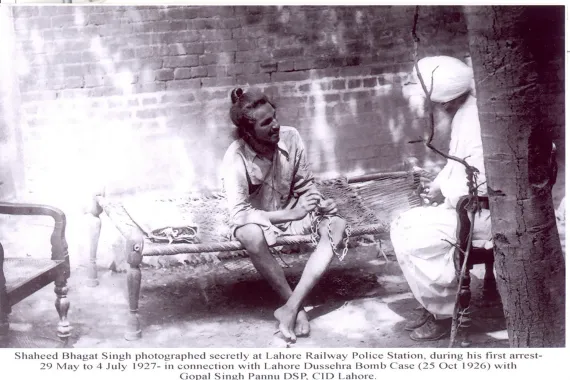
Instead of escaping after the bombing, Bhagat Singh and Batukeshwar Dutt deliberately surrendered to the authorities.
They laid down their weapons and allowed themselves to be arrested because they wanted to use the courtroom as a platform to present their revolutionary ideology before the people.
Later, during the Lahore Conspiracy Case, Bhagat Singh, Sukhdev Thapar, and Shivaram Hari Rajguru were sentenced to death for the murder of John P. Saunders.
It is important to note that they were not sentenced to death for throwing bombs in the Central Legislative Assembly. In that case, they had been awarded life imprisonment. The death sentence was handed down later in the separate trial relating to Saunders’ assassination.
Martyrdom
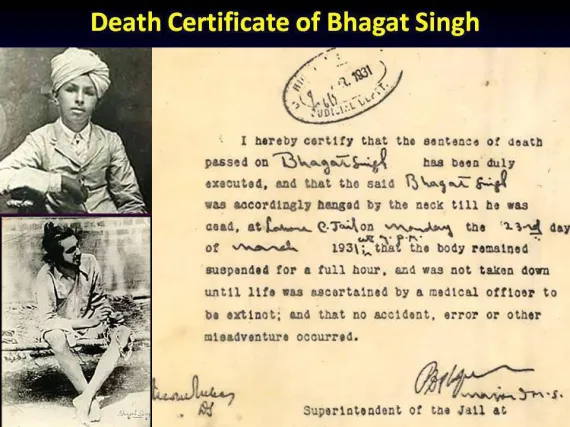
On March 23, 1931, Bhagat Singh, Sukhdev, and Rajguru were executed at Lahore Central Jail.
Their execution came 16 years, 4 months, and 23 days before the end of British rule in India. On August 15, 1947, British colonial rule officially ended, and India gained independence.
Poonch House and the Bhagat Singh Gallery
To conduct the Lahore Conspiracy Case, the British government established a special tribunal.
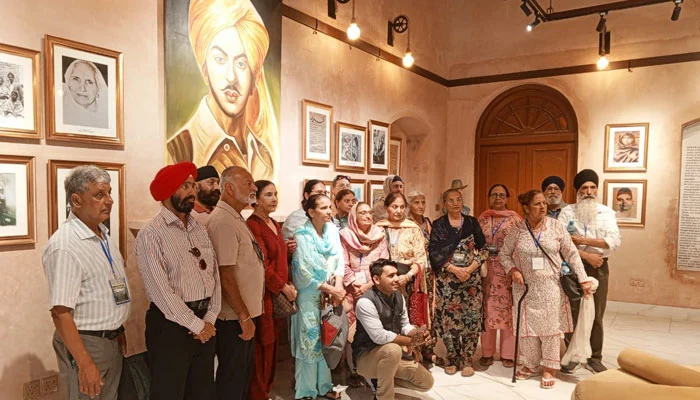
According to historical records, part of the tribunal’s proceedings took place at Poonch House in Lahore, where Bhagat Singh, Sukhdev Thapar, and Shivaram Rajguru were tried.
Today, the historic Poonch House has been converted into a government building under the Punjab Government. Within the premises, the Bhagat Singh Gallery has been established, preserving historical documents, photographs, court records, and other material related to the revolutionary leader and his companions.
Originally, Poonch House was built as the residence of the Maharaja of the Princely State of Poonch, but during the British colonial era it was used for official government purposes.
Bhagat Singh’s Ancestral Home
Bhagat Singh’s ancestral home and his early school in Chak 105 Banga, Faisalabad District, have also been preserved as cultural heritage sites.
Inside one of the historic classrooms, photographs of Muhammad Ali Jinnah, Allama Muhammad Iqbal, and Bhagat Singh are displayed together—an arrangement regarded by many as a unique symbol of the shared history of the Indian subcontinent.
Opinions about Bhagat Singh’s ideology and methods remain divided.
Nevertheless, few historians dispute that he left a profound and lasting impact on the history of the Indian subcontinent.
His birthplace, the Bhagat Singh Gallery in Lahore, his ancestral home, and his school continue to remind visitors of an era when young men and women willingly sacrificed their lives in the struggle for freedom.
Bhagat Singh regarded himself as a socialist revolutionary. He is widely remembered in both Pakistan and India as a hero of the independence movement.
He opposed capitalism, feudalism, and all forms of social exploitation.
His writings—particularly the essay "Why I Am an Atheist”—reveal his views on religion, the state, and social justice. While these ideas have earned admiration in some circles, they have also drawn criticism from sections of religious society.
More than ninety years after his execution, Bhagat Singh remains one of the most influential and debated figures in the history of South Asia. Whether remembered as a revolutionary, a freedom fighter, or a political thinker, his life continues to inspire discussions about sacrifice, justice, liberty, and the enduring struggle against oppression.