



By Urdu Report Editorial Team
Actresses who were once confined for years to conventional roles as mothers, mothers-in-law and grandmothers are now being offered more powerful, complex and emotionally rich characters in Pakistani television dramas.
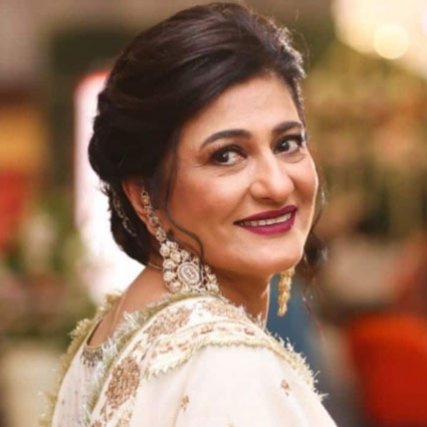
Saba Hameed, Sania Saeed, Hina Khawaja Bayat, Arjumand Rahim, Savera Nadeem and Nadia Afgan are among the senior actresses who have recently portrayed characters that are not merely supporting the younger leads but have their own stories, personalities and emotional journeys.
At present, Saba Hameed can be seen as Dr Farheen in the drama Dr Bahu, while Sania Saeed has appeared in Aap Ki Izzat. Hina Khawaja Bayat was part of Aik Aur Pakeezah, while Arjumand Rahim played Shamsa Begum in Zabt. Savera Nadeem’s notable recent drama is Bismil, while Nadia Afgan also appeared in Aik Aur Pakeezah as Alia. Arjumand Rahim also played Taj Bibi in Sher, while Nadia Afgan portrayed Saiqa.
Beyond the Traditional Mother and Mother-in-Law Roles
For decades, Pakistani dramas offered a relatively limited range of roles to older women. They were generally portrayed either as self-sacrificing mothers or strict mothers-in-law who controlled family affairs.
Male actors of the same age, meanwhile, continued to receive diverse roles as politicians, landlords, businessmen, judges, villains and even romantic heroes. Actors such as Humayun Saeed, Faisal Rehman, Faysal Quraishi and Adnan Siddiqui have continued to appear as romantic leads well into their 50s, while female actors of the same generation were often moved into mother or mother-in-law roles much earlier in their careers.
That trend, however, appears to be changing gradually.
When a Character Is No Longer Just a Mother
In new dramas, older women are increasingly being portrayed as more than just the mothers of a hero or heroine. Their pasts, desires, regrets, vulnerabilities and decisions are becoming important parts of the storyline.
A strict mother-in-law may have reasons behind her behaviour, a quiet mother may carry the weight of past trauma, while a seemingly ordinary woman may have secrets from her past that can change the entire direction of a story.
This shift is making these characters more human, relatable and emotionally engaging for viewers.
Senior Actresses Are Also Seeing the Change
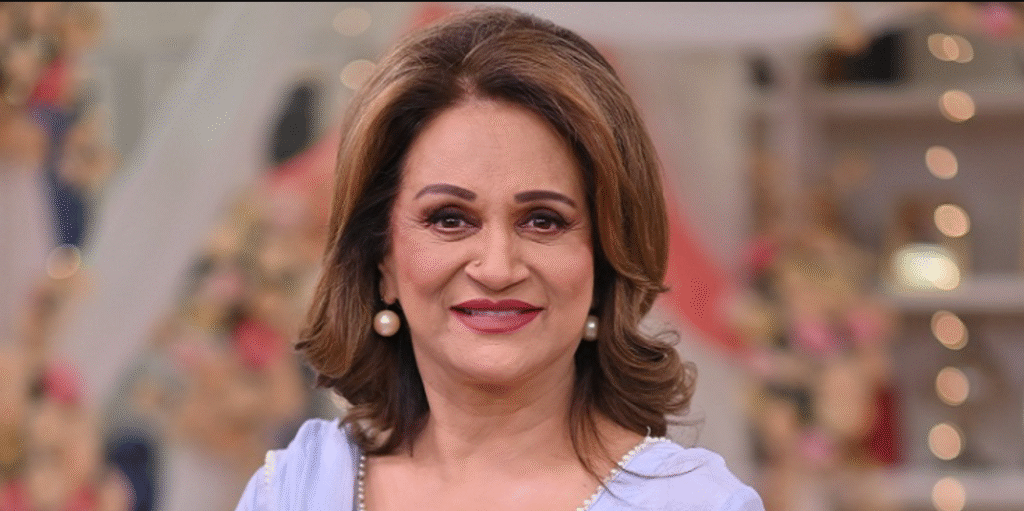
In the past, actresses in their 30s were sometimes cast as women in their 50s and were even asked to play the mothers of actors only a few years younger than themselves. That trend is now gradually changing.
Nadia Afgan has also acknowledged this shift. According to her, older actresses previously received mostly stereotypical roles such as mothers-in-law and sisters-in-law.
She says that older female characters are now increasingly being written with greater depth, individuality and their own storylines.
Changing Audience Preferences
The shift is not only being driven by writers and producers. Changing audience preferences are also playing an important role.
Greater access to international dramas and films has exposed Pakistani viewers to stories in which characters are not simply good or evil but have multiple shades and complexities. As a result, strong characters and meaningful stories are attracting more attention than conventional domestic plots.
Social media provides an interesting example of this change. At times, instead of a glamorous female lead, a grandmother’s wise remark, a mother’s blunt response or an aunt’s perfectly timed dialogue becomes viral.
This shows that viewers are not necessarily attracted by age; strong characters and powerful dialogue are what truly capture their attention.
The Woman of Today
Pakistani society is changing, and so are the lives and experiences of women.
Today, women in their 50s continue to work, travel, run businesses and make decisions about their personal lives. Their identities are no longer limited to being mothers, wives or mothers-in-law.
This is why dramas also need to portray women whose lives extend beyond family responsibilities, including careers, friendships, politics, business, personal ambitions and new relationships.
The Value of Experienced Actresses
A whole generation of actresses who entered television during the 1980s and 1990s now brings decades of experience to the industry. They possess not only acting skills but also the ability to bring emotional depth and complexity to their characters.
Restricting such performers to one-dimensional or background roles can ultimately be a loss for the drama industry itself.
According to Atiqa Odho, contemporary dramas are increasingly offering experienced performers more mature and challenging roles, while allowing individual characters to make a meaningful contribution to the overall story.
But There Is Still a Long Way to Go
Despite this positive change, Pakistani dramas still have a long way to go before older women regularly receive central and substantial roles.
According to Bushra Ansari, interesting and different roles do occasionally emerge, but overall, roles for mature actresses remain limited and repetitive.
Most stories still revolve around younger characters, while the conflicts faced by older women are often restricted to marriage, inheritance and family honour.
Their professional lives, businesses, political ambitions, friendships, personal dreams and the possibility of finding love or beginning a new chapter in life are still rarely explored.
What Comes Next?
Viewers have shown that they connect with characters because of their strength, not their age. When an older woman is portrayed with intelligence, humour, emotions and a story of her own, audiences can embrace her just as enthusiastically as a young hero or heroine.
The next step is for Pakistani drama writers and producers to give older women more than a supporting place in the story and have the confidence to make them central characters.
Perhaps the next major evolution in Pakistani television will be when a 50-year-old woman is no longer simply the mother of a young character, but the central character of her own story.