






By Urdu Report Editorial Team
Lisbon: President Approves Face-Covering Law
Lisbon: Portugal has approved legislation restricting face coverings in public spaces. President António José Martins Seguro promulgated the law on August 18, 2026, according to the official website of the Presidency of the Republic. The legislation regulates the concealment of the face in public places and introduces penalties for violations.
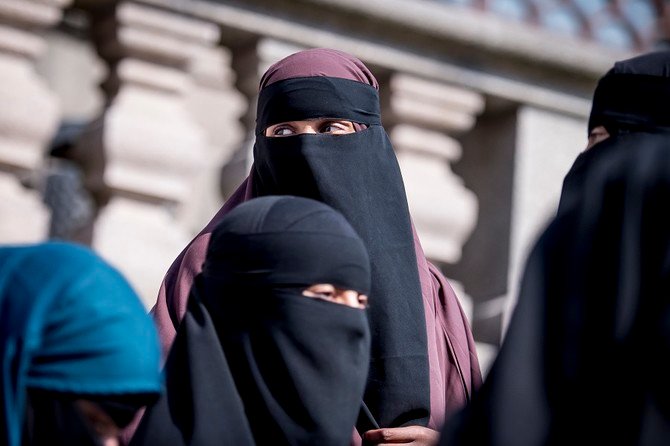
The law does not specifically mention the Burqa or Niqab by name. However, critics say the legislation could have a significant impact on Muslim women who wear full-face coverings for religious reasons.
Fines Could Reach €3,000
Under the new legislation, violations can result in fines ranging from €150 to €750 in cases of negligence. Deliberate violations can carry fines ranging from €400 to €3,000.
The law also prohibits forcing another person to conceal their face through threats, violence, coercion or abuse of authority. Such conduct can result in criminal penalties, including imprisonment in certain circumstances.
Muslim Community Raises Concerns
Portugal’s Muslim Community has expressed concerns about the legislation. Muslim women and community representatives argue that clothing choices can be connected to personal and religious freedom.
The Islamic Community of Lisbon was also consulted during the parliamentary process. Critics have questioned the necessity of the measure, arguing that the number of women wearing the Niqab or Burqa in Portugal is relatively small.
Human Rights Concerns
The legislation has also triggered debate over Human Rights, Freedom of Religion, Freedom of Expression and Personal Autonomy.
Critics argue that the restrictions could disproportionately affect Muslim women who wear the Niqab or other forms of full-face religious covering.
Supporters, however, argue that the measure is designed to address public identification, security and social interaction.
President Explains His Decision
President António José Martins Seguro said the issue was socially and culturally sensitive. He highlighted the importance of the face in human identification and communication.
The President also referred to social integration, non-discrimination and security, as well as relevant decisions of the European Court of Human Rights, in explaining the reasoning behind the promulgation.
Political Parties Divided
The legislation faced strong political divisions in Portugal. The bill received support from Chega, PSD, CDS and IL, while PS, Livre, PCP, BE and JPP voted against it. PAN abstained.
The legislation was initially introduced by the right-wing Chega party, but several amendments were made during the parliamentary process.
Exceptions to the Ban
The law includes several exceptions. Face coverings may be permitted for health, professional, artistic, entertainment and advertising purposes.
Exceptions also apply in certain circumstances involving security and weather conditions. Places of worship, diplomatic and consular premises, and aircraft are also covered by exceptions under the legislation.
Parliament Approved the Law in July
Portugal’s Parliament approved the legislation on July 17, 2026. The final decree was subsequently sent to the President, who promulgated it on August 18.
The legislation therefore has presidential approval. Its actual application depends on the legal provisions governing its entry into force following official publication.